
Truth Be Told
A body language expert and Heathrow resident is the author of a soon-to-be-released book about how to tell when someone is lying

Most people believe they can spot a lie. A glance away, a nervous smile, a shift in posture: We’ve all been taught to read the tells. But according to communication and body language expert Susan Constantine, that confidence is what makes us vulnerable.
After more than two decades of working with judges, law enforcement, and government agencies – often on high-stakes criminal cases – Susan says the truth is far less intuitive and much more scientific.
“The biggest misconception people have is that they’re really good at detecting lies,” says Susan, who lives in Heathrow with her husband.
In reality, most people are reading through bias, assumptions, and habit. Susan explains this in detail in her forthcoming book, How to Spot a Liar in 7 Seconds or Less: Protect Yourself from Criminals, Cons, Predators, and More.
Criminal Minds
Susan’s first encounter with the legal system came at the young age of 15, when she testified as a witness in a murder trial after helping police identify a homicide suspect.
“I was able to identify a person of dangerous intent,” she says, “just based on their behavior.”
That pivotal moment, plus her later work assisting attorneys and their clients, sparked a fascination with behavioral science.
“I was so intrigued with it that I wanted to know everything and anything there was about it,” says Susan. “And that’s how I got to where I am.”
Today, Susan holds two master’s degrees focused on psychology, credibility, behavior, and communication. Her work draws on decades of courtroom and investigative experience, and she has trained judges, attorneys, and law enforcement across the country.
Law and Order
Susan’s path into behavioral analysis wasn’t a direct one. While working as an image consultant, she was asked to help prepare Courtney Love for a court appearance. That led to requests from attorneys for defendant preparation and jury selection consulting, deepening her interest in body language and communication.
Over time, Susan became involved in very prominent cases, including providing expert analysis for the trials of Michael Jackson and Elizabeth Holmes. True crime television shows frequently highlighted her work. But it was a guest stint on Nancy Grace’s TV show – during the trial of Casey Anthony – that brought Susan to a national audience and led to hundreds of television appearances.
“It’s really about finding the truth. That’s always been the goal.”
Since then, Susan has appeared as an on-air analyst for CNN, Fox News, NewsNation, and other media companies, covering big-name cases including those of Bryan Kohberger, Jeffrey Epstein, and Sean “Diddy” Combs. She has also analyzed presidential candidate behavior and trained judges, attorneys, law enforcement officers, and personnel from the FBI and Homeland Security.
Poker Face
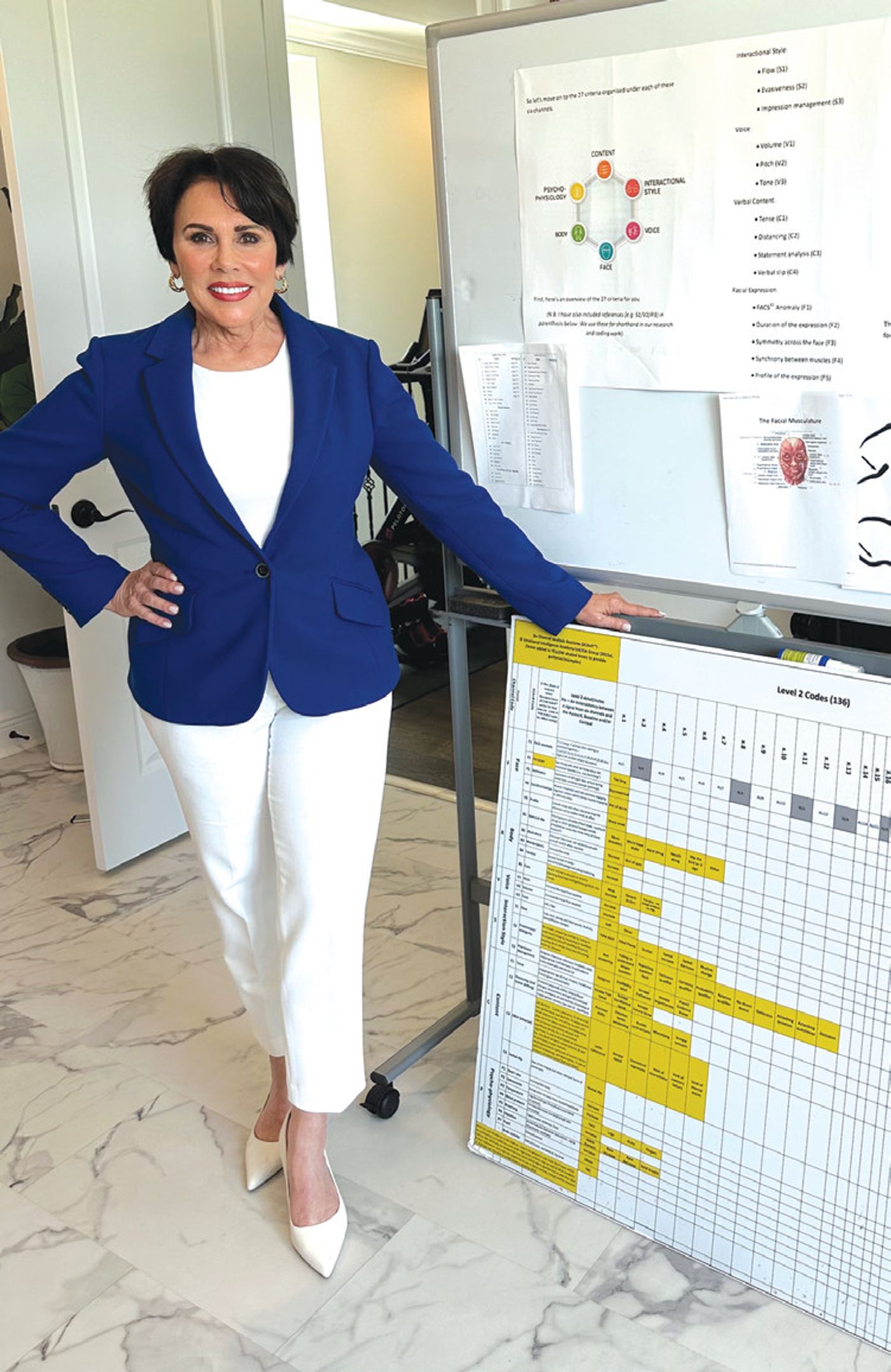
Rather than relying on a single tell, Susan teaches what she calls the six channels of communication: voice, words, facial expression, body language, interaction style, and physiological responses. When assessing whether someone is lying, she looks for inconsistencies.
“You’re not looking for one thing,” says Susan. “You’re looking for clusters and shifts from a person’s baseline behavior when something is at stake. It’s about understanding how people are influenced, and how to protect yourself from it.”
One of Susan’s biggest challenges is helping people unlearn what they think they know. A popular belief is that eye movements can reveal deception, yet she rejects that idea, calling it scientifically debunked.
Also, she says, bias can lead people to interpret behavior through their own emotions or experiences, which can be misleading in high-stakes situations.
Over time, Susan’s work has expanded beyond the courtroom to analyzing interviews, statements, and video evidence. Now, she is bringing her expertise to the general public with her book.
The Truth Is Out There
“I want people to know, how do you vet people? How do you ask the right questions? What are the behavioral indicators you need to look for? Be objective and not emotional,” says Susan.
How to Spot a Liar in 7 Seconds or Less, now available to pre-order, explores how deception works, how people are manipulated, and why even smart individuals can be misled.
“I’m literally taking people inside my lab and showing them how you actually do it and teaching them the right way,” says Susan, who references many famous cases in the book.
At its core, she says, her work is about clarity, not suspicion.
“It’s really about finding the truth,” says Susan. “That’s always been the goal.”
To learn more, visit SusanConstantine.com.